
Apple
A typical apple serving weighs 242 grams and provides 126 calories with a moderate content of dietary fiber (table). Otherwise, there is generally low content of essential nutrients (table).
Walnut
Walnuts without shells are 4% water, 15% protein, 65% fat, and 14% carbohydrates, including 7% dietary fiber (table). In a 100 gram serving, walnuts provide 2,740 kilojoules (654 kcal) and rich content (more than 19% of the Daily Value or DV) of several dietary minerals, particularly manganese at 163% DV, and B vitamins (table). While English walnuts are the most commonly consumed, their nutrient density and profile are generally similar to those of black walnuts. Unlike most nuts that are high in monounsaturated fatty acids, walnut oil is composed largely of polyunsaturated fatty acids (72% of total fats), particularly alpha-linolenic acid (14%) and linoleic acid (58%), although it does contain oleic acid as 13% of total fats.
Chestnut
Chestnut: Chestnuts are highly nutritious and contain much protein and various kinds of vitamins, so they are called the “king of nuts”. Jingdong produces the best chestnuts in China. With its unique climate and fertile soil, Baiyang Valley produces quality chestnuts that are big, thin-skinned, fragrant, sweet, and soft.
Standard rooms
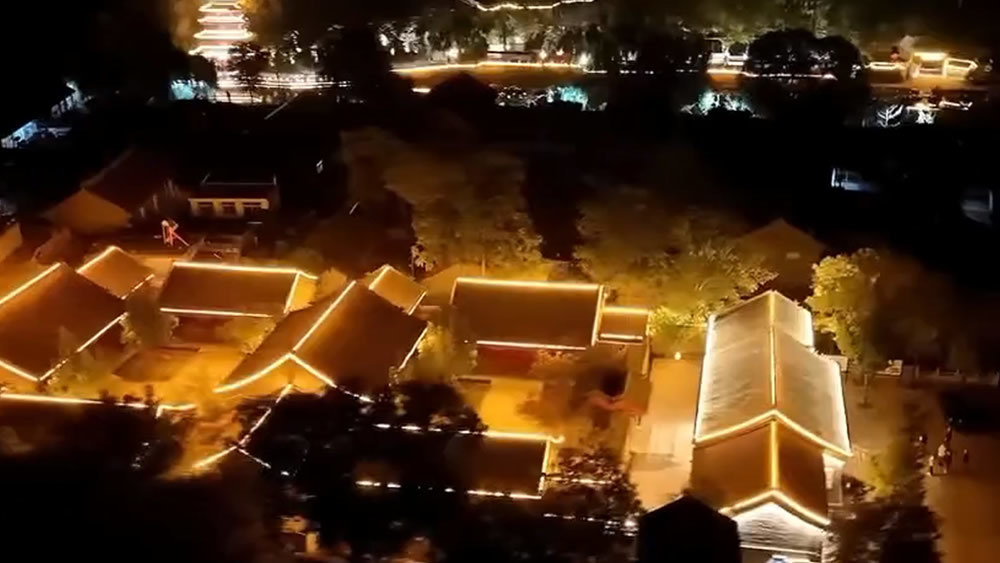
The local residences in Baiyang Valley Great Wall Tourist Area maintain the classic eastern Hebei characters of Ming and Qing dynasties. Built with green tiles and gable-hip roof, they are archaic and charming while maintaining the original folk style. Open the retro wooden door, you will be stunned by the simple Chinese-styled decoration and the primitive fashion as if the time was back to the ancient years. Living here, you will find not only the profound culture connotation, but also the finely-designed casual life. Sit in the yard to enjoy the wild fun of the Great Wall, the blue cloud rising out of the horizon, take a cup of supreme tea, and experience the moment of tranquility.
Courtyard dwellings
The local residences in Baiyang Valley Great Wall Tourist Area maintain the classic eastern Hebei characters of Ming and Qing dynasties. Built with green tiles and gable-hip roof, they are archaic and charming while maintaining the original folk style. Open the retro wooden door, you will be stunned by the simple Chinese-styled decoration and the primitive fashion as if the time was back to the ancient years. Living here, you will find not only the profound culture connotation, but also the finely-designed casual life. Sit in the yard to enjoy the wild fun of the Great Wall, the blue cloud rising out of the horizon, take a cup of supreme tea, and experience the moment of tranquility.
Big bed room
The local residences in Baiyang Valley Great Wall Tourist Area maintain the classic eastern Hebei characters of Ming and Qing dynasties. Built with green tiles and gable-hip roof, they are archaic and charming while maintaining the original folk style. Open the retro wooden door, you will be stunned by the simple Chinese-styled decoration and the primitive fashion as if the time was back to the ancient years. Living here, you will find not only the profound culture connotation, but also the finely-designed casual life. Sit in the yard to enjoy the wild fun of the Great Wall, the blue cloud rising out of the horizon, take a cup of supreme tea, and experience the moment of tranquility.
Family room
The local residences in Baiyang Valley Great Wall Tourist Area maintain the classic eastern Hebei characters of Ming and Qing dynasties. Built with green tiles and gable-hip roof, they are archaic and charming while maintaining the original folk style. Open the retro wooden door, you will be stunned by the simple Chinese-styled decoration and the primitive fashion as if the time was back to the ancient years. Living here, you will find not only the profound culture connotation, but also the finely-designed casual life. Sit in the yard to enjoy the wild fun of the Great Wall, the blue cloud rising out of the horizon, take a cup of supreme tea, and experience the moment of tranquility.
Steamed dumplings made in sweet potato powder
Steamed dumplings made in sweet potato powder: It is a kind of multigrain wheaten food with unique flavor, mild taste, rich content of vitamin B1 and B2, full nutrition, and low calories. It is the perfect food for improving immunity and caring the skin.
Ma Xiang Tofu
"Ma Xiang Tofu" is made of bean products and water from mianyang Spring, a natural ancient spring. It is made by dipping wild Yanshan sichuan peppercorns, local chilies and other spices in oil. The finished bean curd is fragrant and has a unique flavor, making it a rare special food.
Wild vegetables meat balls
"Wild vegetable balls" to fresh purslane as raw materials, then add eggs, flour and other raw materials to make the balls, under the pan fried cooked. Wild vegetable balls eat up soft, with wild vegetable fragrance, very delicious, is a simple and easy to do nutritious food, heat, detoxification and swelling, anti-inflammatory, thirst quenching, diuretic effect.
Braised rabbit
Braised rabbit: Rabbit meat, as a kind of famous skin-care and health-care product, contains a high content of protein, a low content of fat and cholesterol, many types of vitamins and all the eight kinds of amino acids that are necessary for human bodies. It is also fresh and tender in mouthfeel and delicious in taste. The braised rabbit is made with secret soup that is tasty and fragrant by applying a unique preparation method. It can protect the wall of blood vessels, stop the formation of thrombosis, and provide a lot of benefits for patients with hypertension, coronary heart disease and diabetes.
Braised chicken
Baiyangyu food with Jidong characteristics of farmers based rice, representative dishes are steamed dumplings with sweet potato noodles, why why beans, fried crisp su leaves, full fragrant pot meat, pressed piece of cold meat, braised whole rabbit, stewed live chicken, wild vegetable ball, etc., balanced nutrition, game is full, every dish let you have endless aftertaste.
Baiyang Valley Great Wall
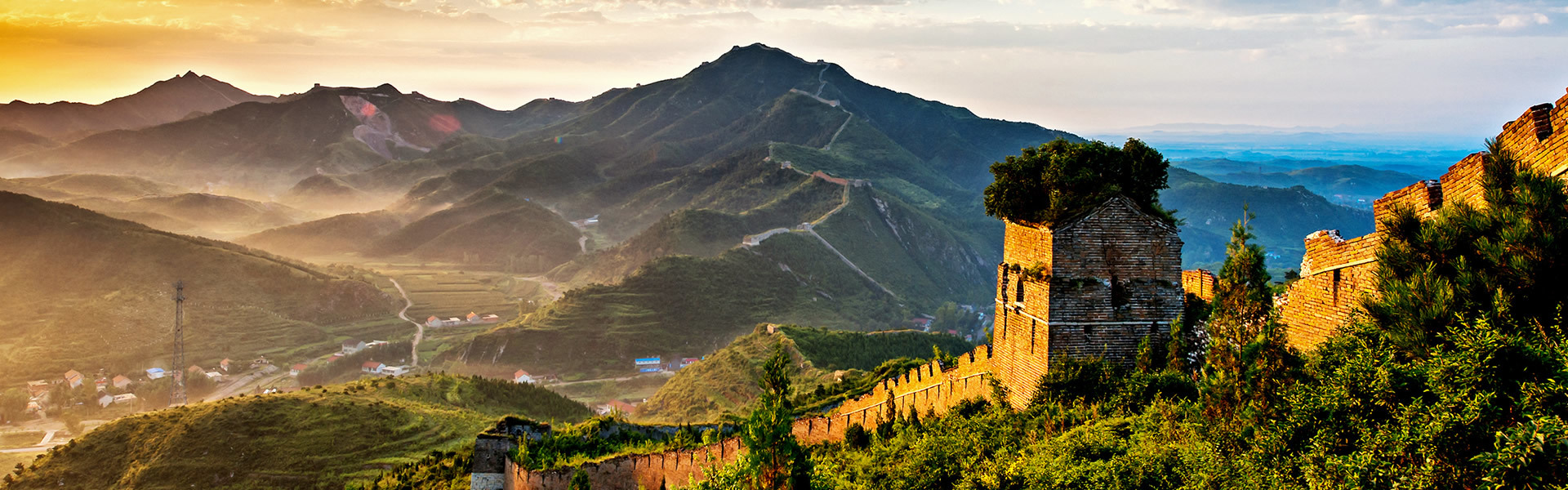
The Great Wall section in Baiyang Valley, which is known for its magnificent mountains and sheer passes with a length of about 4452 meters, starts at the Da Ao Tower at the conjunction with Dazhuang in the east, and ends at the Laojun Terrace in Sidaogou in the west. The Baiyang Valley section of the Great Wall still remains the original look of Ming Dynasty with zero human touch. There are totally twenty one gate towers on the wall, including six intact ones. They are Da Ao Tower, Kengzi Tower, Head Tower, Tip Tower, Square Tower, and Deity Tower from east to west. The Deity Tower stands out preeminently among all the other towers for its unique architectural style. There are many Great Wall sections in China, but Baiyang Valley section still amazes tourists. This marble section of Great Wall is 1.5KM long and was built by Qi Jiguang. It is still kept in good shape. The foundation is completely built with red marble stones with every stone weighing around 500KG. The Great Wall extends along the ridge marvelously. Therefore it is crowned as a wonder of the Great Wall built in Ming Dynasty.
Deity Tower
The Deity Tower was built in 1596 in Ming Dynasty. It is not only a particular watch tower, but a well-designed ancient architecture. Instead of being built on the city wall, it is hung on the outer side of the wall, making it the only one of its kind along the Great Wall. The Deity Tower is more than 33 meters tall, designed in masonry structure with a flush gable roof. Since it’s built on scarcements, the direction of the whole building aligns with the Great Wall. An arch-shaped door is gouged facing the city wall, which is 2.1 meters long, 1.7 meters wide. The door has frames around it and bolts on both sides. A stone plaque, which is 1.04 meters long and 0.35 meters high, is embedded atop the door, with the characters “Shen Wei Lou” (Chinese characters of Deity Tower) inscribed on it. At the upper left corner it writes “by Zhang Shizhong, General of Guerrillas”, and at the lower right corner it writes “at the propitious moment in the summer of 1596, Wanli Reign”.
Guanyin Pavilion
Situated on the 320-meter-high Tuolong Ridge of Baiyang Valley, the Guanyin Tower was built during the time of the North March by the Emperor Yan in Early Ming Dynasty. Legend has it that the guarding soldiers decided to build a Guanyin Pavilion on the mountain opposite to the Baiyang River in order to seek safety. All the bricks and woods were transported to the site and ready for work. In the next morning, workers found all the materials had been transported to Tuolong Ridge. Therefore, solders knelt down and worshiped to the deities, and the Guanyin Pavilion was built here.
Sheep Spring
The legend says Baiyang Valley used to be a treasure mountain owned by one goat and two sheep which were gentle and kind-hearted. A nine-eared macaque living in the mountain was their best friend, helping them guard the treasure in the mountain. But a warlock tried to seize the treasure, so the macaque drove him away. Later, the warlock killed the macaque and the goat with hidden weapons. The two sheep sorrowed for their death, hiding in the Hongyang Cave and crying every day. Their tears continuously poured out from rock cracks, hence the name “Sheep Spring”. Since the spring water flows out from rock cracks, it contains a rich content of trace elements, and tastes sweet and delicious as the top-ranking natural mineral water. Visitors to Baiyang Valley must take a sip of the water of Sheep Spring.
Ancient Castle & 200M Ancient Wall
Surrounded by mountains and rivers, the town here started in Ming Dynasty as a village with a river in the east and mountains in the west. Then villagers built a castle with stones and bricks, which is 4.7 meters tall and 1048 meters in perimeter. The castle had an east gate and a south gate (Jinggao Gate), and housed 50 households.
Marble Great Wall
The Marble Great Wall of Baiyang Valley, with a length of 1.5KM, was built by Qi Jiguang in Ming Dynasty and currently still remains intact. The foundation of this Great Wall section is made of red marble stones with each stone weighing around 500kg. They are extending along the ridge, delivering breath-taking views for visitors. Without machinery, it took our ancestors tremendous efforts to pile up those stones so tidily at the steep mountain top! The Marble Great Wall of Baiyang Valley is definitely a miracle along the Great Wall, and a globally-unique treasure left by our ancestors!
Battery
In order to defend against enemies, Ming emperors built batteries on the Great Wall along the ridge. Those batteries were used as fortresses along the defense line and equipped with large-caliber cannons to provide fire support. There were three kinds of cannons that were famous in Ming Dynasty: the Breech-loading Swivel Gun, the Crouching Tiger Trebuchet, and the Red Barbarian Cannon. The most famous one, the Red Barbarian Cannon, can have a shooting range of 2 to 4 kilometers. The shells were solid, and therefore devastating enough to kill infantries and penetrate the city wall. The batteries and cannons were important forces in the attack and defense on the Great Wall of Ming Dynasty.
Life Prolonging Bridge
The Baiyang River flows from north to south through the Baiyangyu Village. Every summer, the water level will rise and block the connection between the village to the east bank. That caused inconvenience for tourists who wanted to climb the Great Wall section on the east mountain and enjoy views. To facilitate tourists and villagers heading up to the mountain, the village committee built a chain bridge across the Baiyang River in 1998. On the bridge, tourists can look up at the mind-refreshing mountains and the Great Wall, and look down at the crystal-clear water and swimming fish. Such a joy is able to prolong the lives of tourists, hence the name Life Prolonging Bridge.
West Prophetic Fog
In every summer and autumn, a fog belt with a width of 10 to 15 meters floats to the southwest from the mountainside of the west mountain through the pass. This fog zone is like the skirt belt of a fairy floating in the mountains. Local villagers take this fog belt as a weather indicator that can predict rain very accurately. It will surely rain if the fog belt flows from the west mountain to the south and disappear at the Shitizigou Reservoir in the southwest, hence the name “prophetic fog”.
Grinder Watched by Emperor Qianlong
Story has it that when the Emperor Qianlong was having a secret tour in Baiyang Valley, he saw a beautiful woman operating the grinder in the village. The emperor, who had been living a luxury and pampered life, was very curious about this normal farm work. So he stopped and watched it aside. This rural woman, although wearing rough clothes, was beautiful and slim. Inspired by the beauty and diligence of this woman, the emperor plunged into the compilation of the long-known poem named Watch Grinder.
Seven Pine Trees Climbing High
There were seven (now only four) pines on the south mountain of Baiyang Valley, stretching in a line from the mountainside to the top and resembling the “humpback”, hence the name “Seven Pine Trees Climbing High”.
Nine Dragons Playing Balls
Looking down from the Great Wall, we can see nine mountain ranges around Baiyang Valley like nine dragons playing a ball, which is exactly the towering peak where Guanyin Pavilion is located. So this is called “Nine Dragons Playing Balls”.
Booking Hotline:
Address: Baiyang Valley Village, Dacuizhuang Town, Qian’an City, Hebei Province